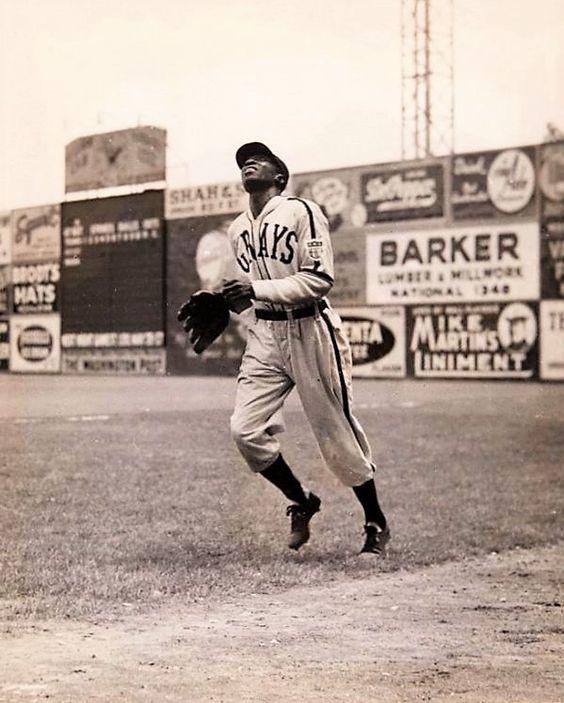
Judy Johnson
William Julius Johnson
Bats Right, Throws Right
Height 5' 11", Weight 150 lb.
Born October 20, 1900 in Snow Hill, MD USA
Died June 15, 1989 in Wilmington, DE USA
Inducted into Hall of Fame in 1975
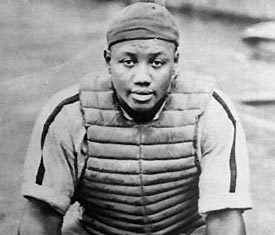
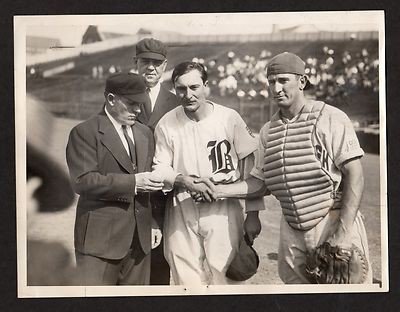
One of the smartest and most dependable players ever to perform in the Negro Leagues, Judy Johnson rivaled Ray Dandridge as the greatest third baseman in the history of black baseball. Noted for his intelligence, outstanding hitting, exceptional defense, and ability to perform well under pressure, Johnson was one of the first former Negro League players to be elected to the Hall of Fame, gaining induction via the Negro Leagues Committee in 1975, 12 years before Dandridge also gained admittance to Cooperstown.
Biography:
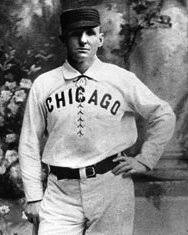
Born on October 26, 1899 in the Town of Snow Hill in Worcester County on the Lower Eastern Shore of Maryland, William Julius Johnson was exposed to baseball at an early age. After moving to Wilmington, Delaware as a child, Johnson served as batboy for his father's local team. He realized then that his "greatest ambition was to play baseball," even though his father originally wanted him to be a boxer. Johnson quit school after the tenth grade and subsequently became a worker on the New Jersey docks during World War I. He began his career as a baseball player after the war, signing his first professional contract with the Atlantic City Bacharach Giants in 1918. Johnson joined the semi-pro Madison Stars of Philadelphia the following year, playing for the team that essentially served as the minor league affiliate of the Negro Leagues Hilldale club. After being promoted to Hilldale in 1921, Johnson acquired the nickname Judy because he resembled a Chicago American Giants player, Judy Gans.
Johnson quickly established himself as the Negro Leagues finest all-around third baseman. Although, at only 5'11" and 150 pounds, the righthanded hitting Johnson had little power at the plate, he was an exceptional line-drive hitter who consistently batted well above .300. Posting batting averages of .391, .369, and .392 from 1923 to 1925, Johnson led Hilldale to the Eastern Colored League pennant in the circuit's first three years of existence. He paced Hilldale with a mark of .341 in a losing effort against the Kansas City Monarchs in the inaugural Negro League World Series played in 1924.
As solid as Johnson was at the plate, he excelled perhaps even more in the field. Blessed with sure hands, good range, and a strong throwing arm, Johnson developed a reputation among his peers as the preeminent defensive third baseman of his time. Outfielder Ted Page, who played with Johnson on the Pittsburgh Crawfords during the early-1930s, had this to say about his former teammate: "Judy Johnson was the smartest third baseman I ever came across. A scientific ballplayer, he did everything with grace and poise. You talk about playing third base? Heck, he was better than anybody I saw. And I saw Brooks Robinson, Mike Schmidt, and even Pie Traynor. He had a powerful, accurate arm. He could do anything – come in for a ball, cut it off at the line, or range way over toward the shortstop hole. He was really something."
Johnson also gained widespread respect for his cerebral approach to the game, and for his calm and placid demeanor. Recognized for his ability to out-think his opponents, Johnson compensated for any physical shortcomings by using his intellect to gain an edge over those against whom he competed. Although he lacked outstanding foot speed, Johnson carefully studied opposing pitchers and stole his fair share of bases. He also excelled in pressure situations, driving in many runs despite his lack of power at the plate.
Negro League legend Cool Papa Bell stated, "Johnson was the best hitter among the four top third basemen in the Negro Leagues (Johnson, Ray Dandridge, Jud Wilson, and Ghost Marcelle), but no one would drive in as many clutch runs as he would. He was a solid ballplayer, real smart, but he was the kind of fellow who could 'just get it done.' He was dependable, quiet, not flashy at all, but could handle anything that came up. No matter how much the pressure, no matter how important the play or the throw or the hit, Judy could do it when it counted."
After excelling as a hitter the previous few seasons, Johnson slumped to .268 in 1927 after suffering a cranial beaning in August of the previous year. His average dipped even further in 1928, to just .224, before he returned to top form the following year by batting a hefty .390. Johnson split the 1930-1932 campaigns between Hilldale, the Homestead Grays, the Darby Daisies, and the Pittsburgh Crawfords, before finding a home in Pittsburgh the next several years. He posted batting averages of .332, .333, and .367 his first few seasons in Pittsburgh, eventually being named team captain in 1935. As captain of the talent-laden Crawfords, Johnson led a team that also included future Hall of Famers Josh Gibson, Oscar Charleston, and Cool Papa Bell. While the other three players all possessed greater natural ability than Johnson, the third baseman was the glue that held the team together. He led the Crawfords to victory in the 1935 Negro League World Series, extending the Series to a decisive seventh game with a game-winning single in the sixth contest.
Johnson spent one more year in Pittsburgh, before ending his playing career with the Homestead Grays in 1937. He retired with a lifetime batting average of .344 in Negro League competition. Although the major leagues failed to integrate for another 10 years, Johnson eventually applied his astute baseball knowledge to the majors, becoming the first African-American to coach in the big leagues in 1954. He also landed a job as a major league scout, earning acclaim as the man responsible for signing Richie (Dick) Allen for the Phillies and outfielder Bill Bruton for the Milwaukee Braves.
Johnson retired from coaching in 1973 and was elected to the Baseball Hall of Fame by the Negro Leagues Committee two years later, becoming just the sixth former Negro League star to be so honored. Known for his exemplary character off the field, Johnson became in 1976 the first athlete ever inducted into the Delaware Sports Museum and Hall of Fame. He passed away in Wilmington, Delaware on June 15, 1989 at 89 years of age.
Negro Leagues Career Statistics
| Year | Team | League | G | AB | R | H | 2B | 3B | HR | RBI | SB | BB | BA | SLG |
| . | . | . | . | . | . | . | . | . | . | . | . | . | . | . |
| 1921 | Hilldale | independent | 29 | 105 | 13 | 28 | 2 | 5 | 2 | 3 | 2 | 3 | .267 | .438 |
| 1922 | Hilldale | independent | 12 | 45 | 5 | 9 | 0 | 1 | 0 | 3 | 2 | 2 | .200 | .244 |
| 1923 | Hilldale | ECL | 61 | 212 | 32 | 58 | 9 | 1 | 2 | 30 | 5 | 14 | .274 | .354 |
| 1924 | Hilldale | ECL | 80 | 307 | 58 | 106 | 27 | 6 | 5 | 55 | 10 | 22 | .345 | .521 |
| 1925 | Hilldale | ECL | 72 | 275 | 59 | 104 | 17 | 11 | 5 | 23 | 7 | 23 | .378 | .575 |
| 1926 | Hilldale | ECL | 89 | 344 | 65 | 113 | 21 | 6 | 1 | 46 | 12 | 22 | .328 | .433 |
| 1927 | Hilldale | ECL | 59 | 222 | 29 | 55 | 5 | 2 | 1 | 15 | 2 | 18 | .248 | .302 |
| 1928 | Hilldale | independent | 60 | 221 | 21 | 51 | 9 | 4 | 1 | 23 | 2 | 7 | .231 | .321 |
| 1929 | Hilldale | ANL | 51 | 210 | 54 | 81 | 11 | 1 | 5 | 32 | 10 | 5 | .250 | .250 |
| 1929 | Homestead Grays | ANL | 4 | 16 | 1 | 4 | 0 | 0 | 0 | 0 | 0 | 0 | .250 | .250 |
| 1930 | Homestead Grays | independent | 27 | 112 | 16 | 33 | 3 | 3 | 0 | 1 | 1 | 6 | .295 | .375 |
| 1931 | Hilldale | independent | 50 | 179 | 23 | 44 | 2 | 3 | 1 | 5 | 3 | 3 | .246 | .307 |
| 1932 | Pittsburgh Crawfords | EWL | 23 | 93 | 19 | 29 | 1 | 1 | 1 | 9 | 1 | 6 | .312 | .376 |
| 1933 | Pittsburgh Crawfords | NNL | 40 | 151 | 19 | 29 | 5 | 0 | 0 | 14 | 2 | 6 | .238 | .272 |
| 1934 | Pittsburgh Crawfords | NNL | 51 | 192 | 25 | 51 | 11 | 2 | 1 | 13 | 4 | 7 | .266 | .359 |
| 1935 | Pittsburgh Crawfords | NNL | 34 | 130 | 19 | 30 | 6 | 1 | 2 | 9 | 1 | 6 | .231 | .338 |
| 1936 | Pittsburgh Crawfords | NNL | 30 | 112 | 16 | 19 | 0 | 1 | 0 | 1 | 2 | 7 | .170 | .188 |
| . | . | . | . | . | . | . | . | . | . | . | . | . | . | . |
| Totals | 16 seasons | 792 | 3004 | 482 | 878 | 129 | 48 | 27 | 280 | 67 | 169 | .292 | .394 | |
| per 162 g | per 162 g | 162 | 614 | 99 | 180 | 26 | 10 | 6 | 57 | 14 | 35 | .292 | .394 |
Source: Shades of Glory, Hogan et al., pp. 390–393, except 1923 season from subsequent research by Patrick Rock
By Bob_CohenMore From Around the Web
Sponsored Links
Related Content
June 18
-
1986
On June 18, 1986, California Angels right-hander Don Sutton ...
-
1977
On June 18, 1977, New York Yankees star Reggie Jackson and m ...
-
1976
On June 18, 1976, Hank Aaron hits his 750th career homer, gi ...

Comments
Be respectful, keep it clean.