Player Pages > Ben Chapman

Ben Chapman

Ben Chapman
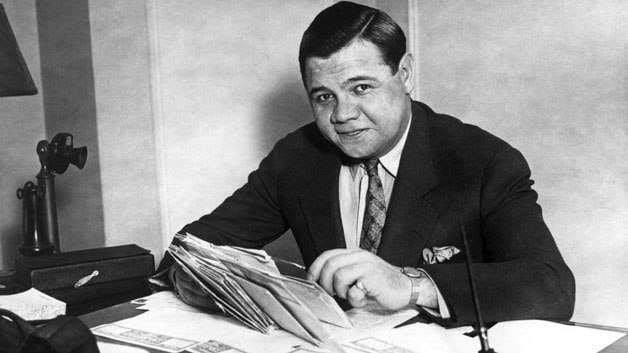
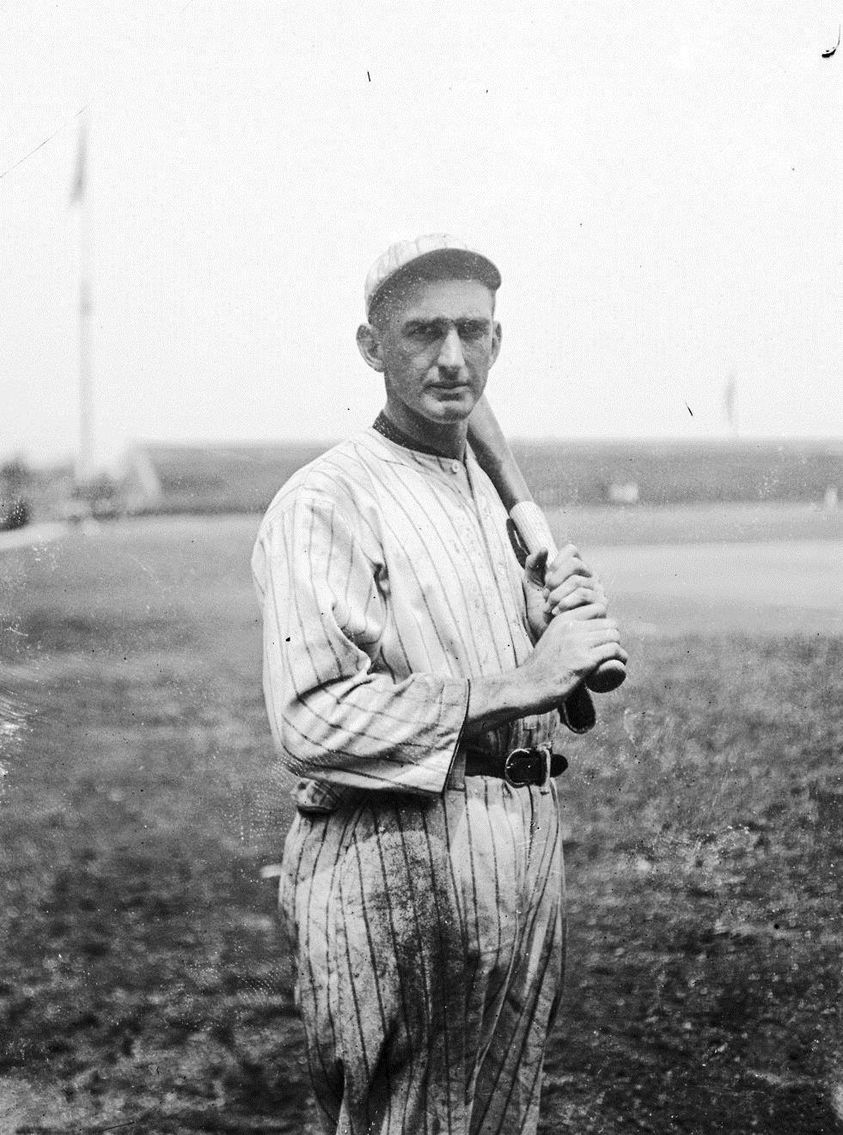
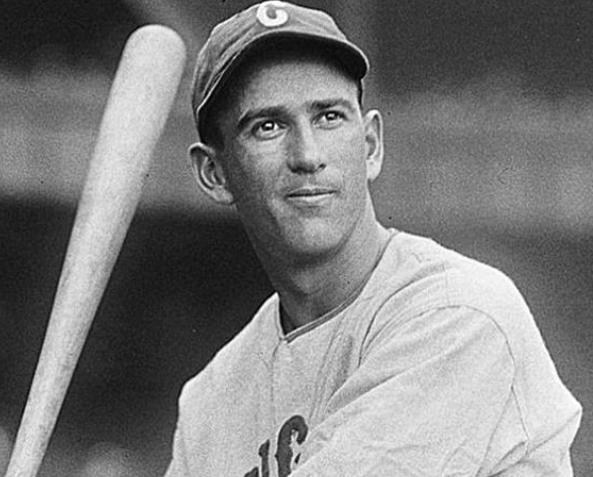
Ben Chapman would have been more at home playing twenty years earlier than he did. He was a fierce base runner with skills to scratch out runs, but he played for the powerful longball-hitting Yankee teams of the 1930s before bouncing around with six other teams in both leagues. The outfielder led the American League in steals four times and was involved in some of the most vicious baseball fights in history. Later, as a manager in the National League, his southern prejudices reared their head when Jackie Robinson integrated the game. | Full bio ⇓

Played For
New York Yankees (1930-1936)
Washington Senators (1936-1937)
Boston Red Sox (1937-1938)
Cleveland Indians (1939-1940)
Washington Senators (1941)
Chicago White Sox (1941)
Brooklyn Dodgers (1944-1945)
Philadelphia Phillies (1945-1946)

Managed
Philadelphia Phillies (1945-1948)

Best Season: 1931
Just 22 years old and in his second season in the big leagues, Chapman enjoyed a fine year in 1931 with the Yanks. His 61 steals were the highest mark in baseball in 11 years, and more than twice that of the National League leader. He stole more bases than both the A's and Red Sox. He accounted for roughly 10% of the steals that year in the entire league. Joining Combs and Ruth in the outfield, Chapman scored 120 runs, drove in 122, and collected 189 hits. He hit 17 homers, 11 triples, and 28 doubles. Though his outfield play was erratic, he used his speed to cut down balls in the gap.

Full Bio
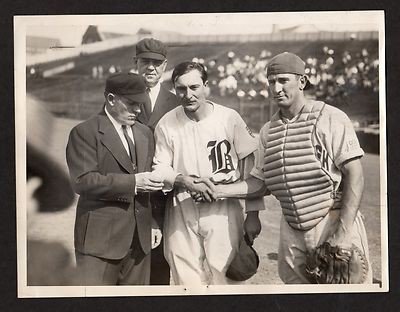
Chapman debuted with the Yanks in 1930, filling a hole at third base. He batted .316 but the following season the team moved Joe Sewell to the hot corner and Chapman was switched to the outfield, playing alongside future Hall of Famers Earle Combs and Babe Ruth. That season he led the curcuit with 61 steals, the first of three straight seasons he topped the AL. His speed often prompted the Yankees to urge the right-hander to bat switch, though he never did so with success. By 1933 Chapman was an All-Star, selected for the first such team. By 1935 he had replaced Combs in center field. Though he lacked power (his career high in taters was 17), Chapman was a spark at the top of the lineup and he hit at least 35 two-baggers six times. But Chapman was unfortunate to have came along in the transition years between Babe Ruth’s heydey and the advent of Joe DiMaggio’s Yankee teams. His sole World Series was in 1932. In April of 1933 Chapman was the catalyst to one of the ugliest fights ever seen on a major league diamond. Sliding hard against the Senators, Chapman took the legs out from under second baseman Buddy Myer. Myer took umbrage and kicked Chapman in the thigh, to which Chapman responded with a flurry of punches. The two tussled for a few seconds as players from both teams spilled onto the field. Order was restored momentarily as both Myer and Chapman were ejected. But Chapman, who had to walk through the Senators bench, suddenly pounced on Washington pitcher Earl Whitehill – knocking him out with his fists. Senators climbed onto the Yankee outfielder as teammates fought to Chapman’s rescue. While the brawl continued in the dugout, Yankee Dixie Walker became embroiled in a dispute with Senator fans who soon had him pinned. Bill Dickey, Tony Lazzeri, and Lefty Gomez came to Walker’s rescue, battling their way through the spectators. Ultimately five fans were arrested, Walker joined Myer and Chapman in banishment from the game, three players were injured. Bad blood had existed between the two teams dating back to July 4th, 1932 when Senator Carl Reynolds and Dickey fought at home plate. Dickey broke reynolds jaw during the melee and was suspended for thirty days. AL president Will Harridge suspended Chapman, Myer (who claimed he was distressed over the appendectomy his wife had undergone two days prior to the incident), and Whitehill for five days. He also fined them each $100. In 1936 the Yankees traded Chapman, by now a thorn in Joe McCarthy’s side (having held out during spring training, complained that the ballpark did not suit him, and claimed the Yankees were years from contending). He was dealt to the Senators in a straight exchange for outfielder Jake Powell. Thus Chapman joined the team that his Yankees had held such disregard for. In 1938 Ben’s bad temper flared again, this time as a member of the Red Sox. Having joined Boston midway through the ’37 season (he led the AL for the final time in steals), Chapman was enjoying his best year at the plate. This was especially satisfying because he had claimed Fenway was made for his type of baseball. He would finish with a career high .340 average. On May 5th of that 1938 season in a game against Detroit in Fenway, Chapman took exception to a strike call from umpire Joe Rue. Tiger catcher Birdie Tebbetts taunted Chapman and the two were quickly on each other, fists flying. It was the first fight in Fenway in two decades. Chapman was once again at the center of controversy, scratching, fighting, and clawing. Just as he liked it.

Where He Played
As noted above, he came up as an infielder, but played mostly outfield in the big leagues. He played center field and right field for nearly the same number of games. Late in his career, during World War II, Chapman found a career as a pitcher, winning five games for the Dodgers in 1944 with a respectable 3.40 ERA.

Born
William Benjamin Chapman was born on December 25, 1908, in Nashville, TN.

Died
July 7, 1993, Hoover, AL

Batted:  Right
Threw:  Right

Primary Position:  OF

Primary Team:  NYA

Major League Debut
April 15, 1930

Nine Other Players Who Debuted in 1930
Luke Appling
Joe Kuhel
Pinky Higgins
Ben Chapman
Hank Greenberg
Lon Warneke
Tommy Bridges
Lefty Gomez
Dizzy Dean

Nicknames
Chappy

Uniform Numbers
#7 (1930-1931, 1934-1936), #6 (1932-1933), #4 (1936-1937, 1941 Senators), #1 (1937 Red Sox), #9 (1938), #2 (1939), #11 (1939-1940), #44 (1940), #45 (1941 White Sox), #5 (1944-1945 Dodgers), #34 (1945 Phillies), #7 (1946)

Similar Players
Wally Moses

Related Players
Buddy Myer, Earle Combs, Earl Whitehill, Jackie Robinson

Hall of Fame Voting
Year Election Votes Pct
1949 BBWAA 1 .7%
1952 BBWAA 1 .4%

Post-Season Appearances
1932 World Series

Batting Feats

  • July 9, 1932: 3 HR...

Transactions
June 14, 1936: Traded by the New York Yankees to the Washington Senators for Jake Powell; June 11, 1937: Traded by the Washington Senators with Bobo Newsom to the Boston Red Sox for Rick Ferrell, Wes Ferrell, and Mel Almada; December 15, 1938: Traded by the Boston Red Sox to the Cleveland Indians for Denny Galehouse and Tommy Irwin; December 24, 1940: Traded by the Cleveland Indians to the Washington Senators for Joe Krakauskas; June 15, 1945: Traded by the Brooklyn Dodgers to the Philadelphia Phillies for Johnny Peacock.

Home Run Facts
of Chapman's 90 career home runs, 15 were hit inside-the-park, many of them in Yankee Stadium. Twice he hit two in one game, and in 1932 he hit three in one contest for the Yankees. His top target was Tommy Bridges of the Tigers, off whom he blasted six homers.

All-Star Selections
1933 AL
1934 AL
1935 AL
1936 AL

Replaced
Gene Robertson, at third base for the Yankees.

Replaced By
Several trades in a short span, as well as World War II, left Chapman a part-time player. His last starting job was as Cleveland's left fielder in 1940.

Best Strength as a Player
Speed

Largest Weakness as a Player
Chapman was a poor percentage basestealer, having been successful less than 69% of the time.

Learn More about Ben Chapman
Search Amazon.com for Books about Ben Chapman ⇒
Search for Ben Chapman at Google ⇒
View a map of his hometown at Mapquest ⇒

Find a Player

 
Hall of Famers
Top 100 of all-time
Players with bios
Browse player index