Player Pages > Ken Holtzman

Ken Holtzman

Ken Holtzman
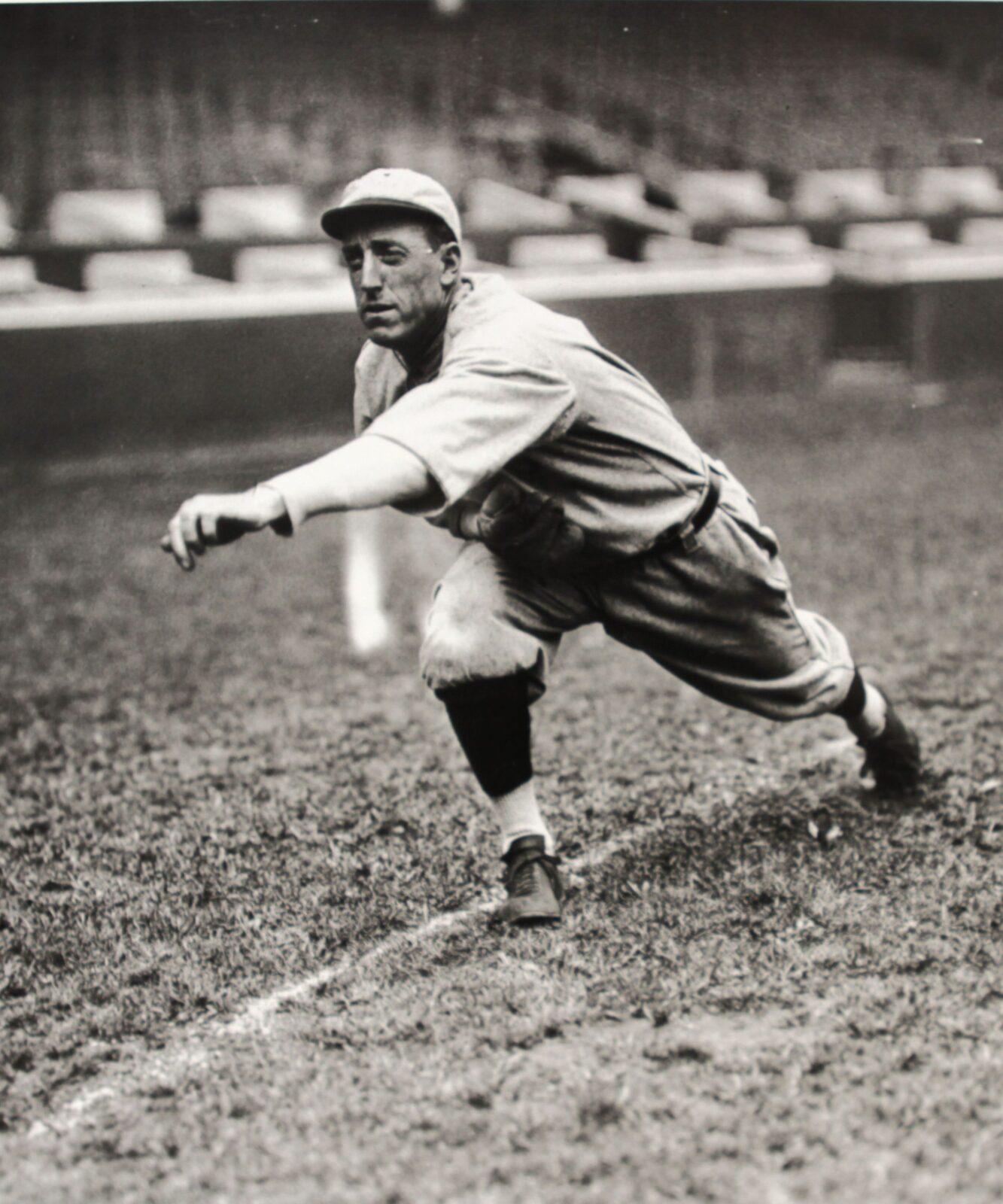
Ken Holtzman was compared to Sandy Koufax early in his career. Both were left-handed, both were Jewish, and both had devastating curveballs. But that comparison was unfair to Holtzman, who went on to have an excellent career, winning 174 games in 15 seasons. The St. Louis-native was involved in three big trades, one sending him from the Cubs to Oakland, one sending him from the A's to Baltimore, and the other shipping him from the Orioles to the Yankees. With the A's he joined Vida Blue and Catfish Hunter in a formidable starting rotation that led Oakland to three straight World Series titles. A crafty left-hander who preferred to induce a groundball rather than a strikeout, Holtzman won 17 or more games six times, and pitched two no-hitters. A clutch performer, Holtzman was 4-1 with a 2.54 ERA in eight World Series starts.

Played For
Chicago Cubs (1965-1971)
Oakland Athletics (1972-1975)
Baltimore Orioles (1976)
New York Yankees (1976-1978)
Chicago Cubs (1978-1979)

Best Season: 1973
We chose '73 not because he won 21 games or pitched nearly 300 innings during the regular season, but because he did that and also won two games in the World Series, including Game Seven. Holtzman allowed just two walks every nine innings, and he completed 16 of his 40 starts. He was a workhorse for the A's won their second straight title.

Holtzman vs. Koufax
On September 25, 1966, Holtzman and Sandy Koufax dueled in Chicago's Wrigley Field. It was a battle of the pre-eminent left-handed pitcher against the rising left-handed pitcher in the league. Both pitchers also happened to be Jewish. Holtzman, in what he later described as his "greatest thrill in the game," defeated Koufax and the Dodgers, 2-1, as he no-hit LA for eight innings.

Holtzman for Monday
On November 29, 1971, three trades rocked baseball. The Reds got Joe Morgan from the Astros, the Indians traded Sam McDowell to the Giants in a deal that netted them Gaylord Perry, and the Oakland A's acquired Holtzman from the Cubs for outfielder Rick Monday. The Reds got the better end of their deal, the Giants lost their deal, but the last one is harder to quantify.

Holtzman paid immediate dividends, averaging 19 wins his first four season in Oakland, and in three of those seasons he earned a World Series ring. Of course, those were his only four seasons in Oakland, as he was part of Charlie Finley's fire sale in the mid 1970s. On April 2, 1976, faced with the prospect of losing his stars to free agency, Finely traded Holtzman and Reggie Jackson to Baltimore for Don Baylor, Mike Torrez and Paul Mitchell (the ballplayer, not the hair solon). Baylor and Torrez were too talented to stay in the Bay Area, the former leaving via free agancy after the '76 campaign, the latter in a trade to the Yanks that netted the A's nothing much. And so, the A's got four very good seasons from Holtzman and single seasons from transients Baylor and Torrez.

Now for the Monday side of the deal. Monday played in Chicago for five seasons (1972-1976), and obviously never won anything except the gratitude of all Americans when he stopped some morons from burning a flag in the Dodger Stadium outfield. He was never an All-Star in Wrigleyville, but he had some decent seasons (highs of .294-32-77). The cubs dealt Monday to the Dodgers in January of 1977, for Bill Buckner and Ivan DeJesus. Billy Buck had seven very, very good years in Chicago, winning a batting title. DeJesus was Ozzie Smith-light at shortstop, even leading the NL in runs scored in 1978. The deal turned out great for Chicago.

So, we have Holtzman's four excellent seasons in Oakland weighed against Monday's tenure in Chicago and the other players he brought to the Cubs in trade (Buckner and DeJesus). Holtzman also netted the A's one non-descript season from both Baylor and Torrez. Despite the fact that Holtzman helped anchor a staff that garnered the A's three titles, I'd have to give the deal to the Cubs. Holtzman would have been an ace for Chicago for a few years and then slid into mediocrity (23-26 win/loss mark after leaving the A's, finished by age 33) anyway. Instead, they got Monday for a few years and more importantly, Buckner's bat and DeJesus's glove for even longer. Oh, by the way, the Cubs traded DeJesus early in 1982 for Larry Bowa and a guy named Ryne Sandberg. Advantage Cubs.

Lights Out on a Career
In the second game of a doubleheader at Wrigley Field on August 5, 1979, between the Cubs and Cardinals, play was delayed for nearly 20 minutes due to darkness - at 3:30 p.m. A blanket of dark clouds camped above the field but not one drop of rain fell. When the game resumed, Holtzman got the loss. It was the final decision of his big league career.

Where He Played
Starting pitcher

Born
Kenneth Dale Holtzman was born on November 3, 1945, in St. Louis, MO.

Batted:  Right
Threw:  Left

Primary Position:  P

Primary Team:  CHN

Major League Debut
September 4, 1965

Nine Other Players Who Debuted in 1965
Lee May
Mark Belanger
Bobby Murcer
Roy White
Steve Carlton
Tug McGraw
Fergie Jenkins
Jim Palmer
Catfish Hunter

Uniform Numbers
#30 (1965-1975, 1976 Orioles, 1978-1979 Cubs), #53 (1976-1978 Yankees)

Similar Players
Frank Viola, Mike Flanagan, Fernando Valenzuela

Related Players
Sandy Koufax, Rick Monday (see below)

Hall of Fame Voting
Year Election Votes Pct
1985 BBWAA 4 1.0%
1986 BBWAA 5 1.2%

No-Hitter
8/19/1969: For CHI (N) vs. ATL (N), 3-0 at CHI. 9 innings pitched.
6/3/1971: For CHI (N) vs. CIN (N), 1-0 at CIN. 9 innings pitched.

Post-Season Appearances
1972 American League Championship Series
1972 World Series
1973 American League Championship Series
1973 World Series
1974 American League Championship Series
1974 World Series
1975 American League Championship Series

Post-Season Notes
In 13 post-season starts, Holtzman was 6-4 with a nifty 2.30 ERA in more than 70 innings pitched. He started games one, four and seven of the 1973 World Series against the New York Mets. He left Game Seven with a 5-1 lead in the 6th inning and got the win after relief help from Rollie Fingers and Darold Knowles.

Holtzman was not used in either the 1976 Playoffs or World Series by Yankee manager Billy Martin. In a surprise move, Martin named Doyle Alexander to start Game One of the World Series in Cincinnati, rather than Holtzman or Doc Ellis. After Game Three of the Series, with the Yanks down three games to none, a testy Martin snapped at a reporter when he asked the manager "how do you spell Holtzman?" Holtzman did his best, at least in the papers, to diffuse the controversy, saying, "I'm not disappointed. They're paying me an awful lot of money, and if he wants to put me in the bullpen, I'll do it... I respect Billy's baseball knowledge."

But Martin's cryptic explanations made the situation more suspicious. When asked why Holtzman had been passed over in the five-game playoff against the Royals and through the first three games against the Reds, Billy said, "I'll answer that after the Series." Seemingly, Martin had lost confidence in the left-hander. The next season, Holtzman began in the rotation, but was quickly relegated to part-time duty. Soon, he was not pitching at all. During one three-week stretch from mid-July to early-August, he pitched twice in relief. Finally, the normally quiet Holtzman reacted. "The Yankees are trying to win with 24 players. Certainly I want to play. How frustrating is it to come to the ballpark every day and not play? I was obviously not told the truth when I signed here. They asked me to sign a long-term deal because they said they wanted me to pitch here for a long time. It's getting hard to explain to my friends in the league why I'm not pitching."

What had happened? The truth is that Yankee owner George Steinbrenner had grown disenchanted with Holtzman almost as soon as he acquired him. After Holtzman realized he wasn't going to be used on a regular basis, he demanded a trade. Since he had ten years in the big leagues, he could choose the teams he could be traded to. Steinbrenner wanted Holtzman to wave that right, and when the lefty refused, George bristled. As he rotted on the bench, Holtzman asked to be traded to Milwaukee or Chiago, where he could be closer to his home in Lincolnshire, Illinois. For the next year, Steinbrenner ordered Martin to use Holtzman as an insurance policy, and not to use him in the regular rotation. When general manager Gabe Paul asked Holtzman to report early to spring training in 1978, Holtzman declined, citing family problems. Holtzman's wife had been having trouble with her pregnancy, and Holtzman wanted to stay close to home. Paul's reaction was less than sympathetic, and the pitcher fired back. "When he (Paul) said subordinate my family to baseball, the credibility gap widened... Just because he may not have a satisfactory family life, doesn't mean I don't." Holtzman claimed that Steinbrenner had told him that if he didn't wave his no-trade clause and let the Yankees deal him to the team of their choice, that George "would be waving to him for a long time in the bullpen."

Early in June of 1978, the Yankees placed Holtzman on the disabled list, despite Holtzman's assertion that he was healthy. The pitcher notified union president Marvin Miller, who called the Yankees' decision "outrageous." Finally, amid this turmoil, on June 10, Holtzman was dealt to the Chicago Cubs, ending his frustrating stay in the Bronx. Holtzman became the fifth player union representative that the Yankees traded. Unfortunately, the left-hander was finished as an everyday starter, and he won just seven more games in the big leagues. His days of wasting away in the Yankee bullpen had hastened the end of his career.

Feats
Holtzman hurled a 3-0 no-hitter against the Atlanta Braves on August 19, 1969. A few years later he pitched a second no-hitter, defeating the Cincinnati Reds 1-0, on June 3, 1971. Holtzman scored the only run of that game.

Milestones
With the A's, he won his 100th career game on May 14, 1973, when he four-hit the Chicago White Sox.

Transactions
June 8, 1965: Drafted by the Chicago Cubs in the 4th round of the 1965 amateur draft; November 29, 1971: Traded by the Chicago Cubs to the Oakland Athletics for Rick Monday; April 2, 1976: Traded by the Oakland Athletics with Bill VanBommell (minors) and Reggie Jackson to the Baltimore Orioles for Don Baylor, Mike Torrez, and Paul Mitchell; June 15, 1976: Traded by the Baltimore Orioles with Doyle Alexander, Jimmy Freeman, Ellie Hendricks, and Grant Jackson to the New York Yankees for Rudy May, Tippy Martinez, Dave Pagan, Scott McGregor, and Rick Dempsey; June 10, 1978: Traded by the New York Yankees to the Chicago Cubs for a player to be named later. The Chicago Cubs sent Ron Davis (June 12, 1978) to the New York Yankees to complete the trade; October 3, 1979: Released by the Chicago Cubs.

All-Star Selections
1972 AL
1973 AL

Replaced
Larry Jackson, who was traded (along with another starting pitcher, Bob Buhl) to the Phillies early in 1966. Holtzman was just 20-years old when he got his first crack in a big league rotation.

Replaced By
The Cubs went to a four-man rotation, sort of, in 1980, the year after Holtzman retired.

Best Strength as a Player
Holtzman was a groundball pitcher, which came in very handy pitching in Wrigley Field for more than half of his career. He allowed as many as 20 home runs just four times in his career.

Largest Weakness as a Player
He hit .163 in more than 600 at-bats.

Learn More about Ken Holtzman
Search Amazon.com for Books about Ken Holtzman ⇒
Search for Ken Holtzman at Google ⇒
View a map of his hometown at Mapquest ⇒

Find a Player

 
Hall of Famers
Top 100 of all-time
Players with bios
Browse player index