Don Mattingly
- Position(s):
- 1B, LF, OF, RF, 2B, CF, 3B, DH
- Nicknames:
- Donnie Baseball
- Born:
- April 20, 1961
- Bats:
- Left
- Throws:
- Left
- Height:
- 6'
- Weight:
- 175 lbs
- Major League Debut:
- 9-08-1982 with NYA
- Allstar Selections:
- 1985 GG, 1985 MVP, 1986 GG, 1987 GG, 1988 GG, 1989 GG, 1991 GG, 1992 GG, 1993 GG, 1994 GG, 1985 SS, 1986 SS, 1987 SS, 1993 LG, 1985 ML
“He was special. That’s the best word you can use for Mattingly because of all the phases of what he meant to me and the Yankees. He was just special.” the late Yankee owner George Steinbrenner.
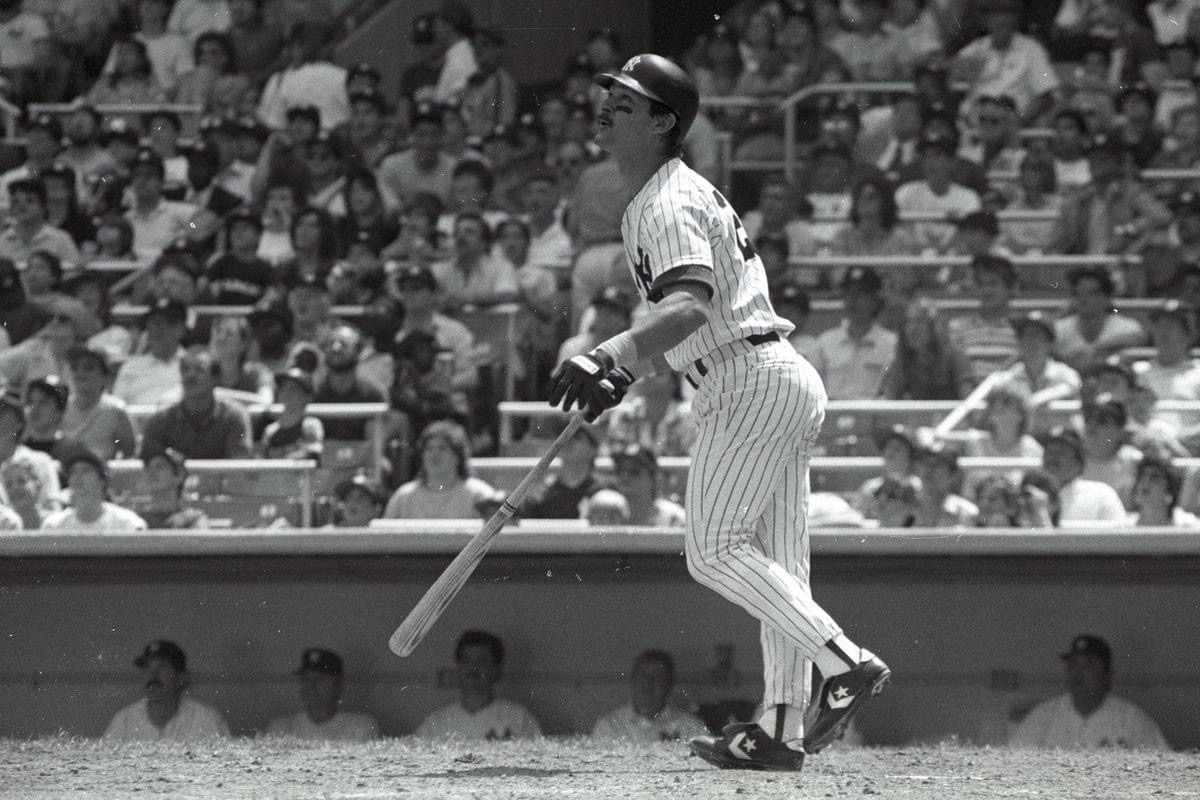
One of the most beloved athletes in the history of New York sports, Don Mattingly is generally considered to be the greatest New York Yankees player never to win a championship. Mattingly arrived in the Bronx for the first time in 1982, just one year after the Yankees appeared in the World Series against the Los Angeles Dodgers, and he remained with the team until 1995, one year before they won their next world championship. Mattingly’s poor timing is very much symbolic of his star-crossed career – one that undoubtedly left the All-Star first baseman wondering “what if” when he left the game at the conclusion of the 1995 campaign. Even though the man who came to be known as “Donnie Baseball” received numerous honors over the course of his career, he could have accomplished so much more had his performance not been compromised his last several seasons by an injured back that eventually forced him into early retirement.
Biography:
Born in Evansville, Indiana on April 20, 1961, Donald Arthur Mattingly developed a love of the game of baseball at an early age, following his two older brothers on their daily treks to the local sandlot. Growing up in the small Midwestern town of Evansville, Mattingly learned to appreciate the simple things in life, enjoying the time he spent with the other members of his family and developing a strong work ethic. The hard work Mattingly put in on the baseball field eventually enabled him to establish himself as one of the nation’s top prospects at Reitz Memorial High School, where he also starred in football and basketball. Mattingly led the Tigers to a state record 59 straight victories from 1978 to 1979, helping the team capture the Indiana State Championship in the first of those years. The Tigers also were State Runners-up in 1979, when their best player earned a brief write-up in Sports Illustrated. Mattingly led Reitz Memorial to an overall record of 94-9-1 in his four years with the team, batting .463 and establishing numerous school records.
Ordinarily, Mattingly’s outstanding performance would have earned him an early selection in Major League Baseball’s 1979 amateur draft. However, most teams believed the 18-year-old outfielder/first baseman was destined for college. Mattingly even accepted a scholarship offer to play baseball for the Indiana State Sycamores. Instead, though, he decided to begin his professional career when the Yankees selected him in the 19th round of the draft.
Mattingly spent the next four years working his way up the New York farm system, excelling at every level at which he competed. After posting batting averages of .349, .358, and .316 his first three seasons, the lefty-swinging Mattingly compiled a mark of .315 at Triple-A Columbus in 1982, earning his first call-up to the big league club in early September. Appearing in only seven games, he batted just .167 over the season’s final month, prompting the team to return him to the minors for the start of the 1983 campaign.
Mattingly knew he had a rough road ahead of him if he intended to earn a starting job in New York. The team rarely allowed its young players to take the field, preferring instead to either sign veteran players through free agency or acquire them via trades. Furthermore, several other players preceded him on New York’s depth chart. Roy Roy Smalley, Ken Griffey, and Steve Balboni all found themselves vying for playing time at first base. Meanwhile, Mattingly’s path to a starting spot in the outfield was blocked by Dave Winfield, Steve Kemp, and Jerry Mumphrey.
Nevertheless, Mattingly made a strong case for himself when he returned to New York two months into the 1983 season. Splitting his time between the outfield and first base, the versatile 22-year-old did an outstanding defensive job wherever he played, while posting a .283 batting average, hitting four home runs, and driving in 32 runs in just over 300 total plate appearances.
Launch into prominence:
After shifting back and forth between the outfield and first base early in 1984, Mattingly eventually established himself as New York’s starting first baseman. Displaying soft hands and exceptional range, Mattingly ended up leading all A.L. first sackers in fielding percentage for the first of four times, while also finishing second in assists. In addition, he quickly developed into one of the junior circuit’s most formidable batsmen, hitting 23 home runs, knocking in 110 runs, scoring 91 others, and leading the league with 44 doubles, 207 hits, and a .343 batting average. Mattingly’s mark of .343 enabled him to barely edge out teammate Dave Winfield for the batting title. The first baseman captured league leadership honors by going 4-for-5 on the season’s final day. Mattingly’s exceptional all-around performance earned him the first of four straight selections to The Sporting News All-Star Team and a fifth-place finish in the league MVP voting.
While some within the Yankee organization may have been a bit surprised by Mattingly’s quick ascension into stardom, few were stunned by his high batting average. A career .332 hitter in the minor leagues, Mattingly earlier established himself as an outstanding hitting prospect. The thing that surprised virtually everyone associated with the Yankees, though, was the youngster’s emergence as a power hitter. Primarily a gap-to-gap hitter when he first arrived in New York, Mattingly, at 6’0” and 190 pounds, didn’t present a particularly imposing figure standing in the batter’s box. However, he worked extensively with team batting instructor Lou Piniella and quickly learned to look for the inside pitch that he might drive into Yankee Stadium’s short right-field porch. The first baseman’s short, compact swing, tremendous bat speed, and intelligence at the plate also made him an outstanding two-strike hitter, enabling him to rarely strike out. He fanned only 33 times in more than 600 official at-bats in his first full season.
Mattingly followed up his breakout season with a spectacular 1985 campaign in which he placed among the league leaders with 35 home runs, 107 runs scored, 211 hits, a .324 batting average, and a .567 slugging percentage, while also topping the circuit with 145 runs batted in, 48 doubles, and 370 total bases. Mattingly earned the first of five consecutive Gold Gloves for his outstanding defensive work at first base, was voted the American League’s Most Valuable Player, and was selected as the Major League Player of the Year.
Fast becoming a Yankee icon, Mattingly had an equally brilliant 1986 campaign, after which a media poll named him the best player in the game. In arguably his finest all-around season, the first baseman finished near the top of the league rankings with 31 homers, 113 runs batted in, 117 runs scored, and a career-high .352 batting average. He also led the league with 53 doubles, 238 hits, 388 total bases, and a .573 slugging percentage, while amazingly striking out only 35 times in 742 total plate appearances.
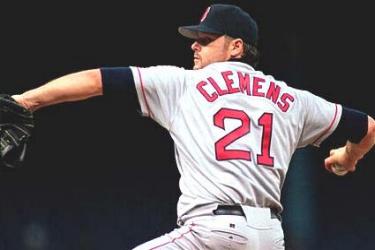
Mattingly’s 53 doubles and 238 hits both established new Yankee records. He might have captured his second batting title as well had Boston’s Wade Boggs not elected to sit out the season’s final few games in order to protect his slim lead over Mattingly in the batting race. Mattingly’s extraordinary performance earned him a second-place finish to pennant-winning Boston’s Roger Clemens in the league MVP balloting.
Widely recognized as one of the sport’s truly great hitters, Mattingly drew praise from teammates and opponents alike. Pitcher Dave Righetti saw Mattingly when the latter first arrived in New York and spent the next several seasons admiring his teammate. Righetti recalled, “He (Mattingly) had so much confidence. He could hit with strikes on him…He wasn’t worried about it.”
Roger Clemens noted, “You could never get in a pattern with Donnie. He’d shoot you to left and pull you to right and, as a pitcher, that’s difficult to deal with.”
Third baseman Mike Pagliarulo said of his former teammate, “The only way he was gonna’ get out was if you threw the ball in the dirt five feet in front of home plate where he couldn’t reach it. Otherwise, he was gonna’ put the bat on it and get a hit.”
New York Mets star pitcher Dwight Gooden only faced Mattingly a few times in exhibition games. The hard-throwing right-hander once commented, “I’m glad I don’t have to face that guy every day. He has that look that few hitters have. I don’t know if it’s his stance, his eyes or what, but you can tell he means business.”
Meanwhile, Gene Michael, who observed Mattingly from various vantage points within the Yankee organization, discussed his fielding ability by saying, “Nobody could play defense better than him at first base. He was the best first baseman defensively you’d ever want to see.”
Mattingly continued his assault on American League pitching in 1987, hitting 30 homers, knocking in 115 runs, scoring 93 others, and batting .327. The first baseman also accomplished two historic feats, tying a major league record by hitting home runs in eight consecutive games, and establishing a new major league mark by hitting six grand slams over the course of the season. The 10 home runs Mattingly hit during his eight-game streak also established a new record, as did his concurrent streak of 10 games with at least one extra base hit. Meanwhile, Mattingly’s six grand slams were ironically the only ones he hit during his career.
Despite his brilliant performance throughout the 1987 campaign, Mattingly experienced adversity for the first time in his young career. After missing a total of only two games the previous two seasons, the first baseman spent two weeks on the disabled list in June after injuring his back during a fielding drill. Although Mattingly returned with a vengeance, embarking on his record-tying home-run streak shortly thereafter, the disk problem that surfaced in his back served as a portent of things to come.
Back problems slow Donnie Baseball
Despite making his fifth consecutive All-Star appearance and winning his fourth straight Gold Glove, Mattingly had a slightly subpar 1988 season, hitting only 18 home runs, driving in just 88 runs, scoring 94 others, and batting .311. He also committed a career-high nine errors at first base, while being forced to sit out 17 games due to occasional back stiffness.
Mattingly battled through his back problems in 1989, finishing the year with 23 home runs, 113 runs batted in, and a .303 batting average. However, his chances of fulfilling his dream of advancing to the postseason appeared to be dwindling. Yankee owner George Steinbrenner’s constant meddling in the affairs of the team, and several ill-advised personnel decisions made by the front office reduced the Yankees to a level of mediocrity not experienced by the franchise in more than two decades. After winning at least 85 games and finishing second twice in Mattingly’s first five full seasons, New York finished fifth in the A.L. East in 1989, with a record of only 74-87. Steinbrenner attempted to defuse criticism from both the fans and the media by pointing out that, even though they failed to win a championship during the decade, the Yankees won more games than any other team in baseball during the 1980s. Discussing the frustration he felt over not being able to perform in the postseason his first few years in New York, Mattingly later revealed, “I just assumed we were going to get to the playoffs and we were going to win. I felt like good things were going to happen to us. We always had good players. We had an opportunity to win every year and just didn’t get it done.”
The 1990 campaign turned out to be the low point of Mattingly’s career. Having to adjust his batting stance to compensate for the ever-increasing pain in his lower back, the first baseman struggled terribly at the plate the first half of the season, before finally going on the disabled list in July. He returned to the club some two months later, finishing the year with career lows in home runs (5), runs batted in (42), runs scored (40), and batting average (.256). The Yankees also reached their nadir, finishing last in the A.L. East with a record of only 67-95.
After undergoing extensive physical therapy during the offseason, Mattingly returned to the Yankees in 1991 to appear in a total of 152 games. However, still suffering from constant back pain, he played only 127 games at first base, often serving the team as a designated hitter. Unable to shift his weight and turn his hips as he once did, Mattingly hit only nine home runs, knocked in just 68 runs, and batted only .288.
Still, the first baseman drew the admiration and respect of all his teammates. Named team captain prior to the start of the season, Mattingly became more vocal than he had been earlier in his career, taking it upon himself to occasionally speak out against team ownership for the manner in which it often mistreated its players. After one particularly unpleasant confrontation with management, Mattingly proclaimed “The players get no respect around here. They (the Yankees) give you money…that’s it…not respect. We get constantly dogged, and players from other teams love to see that. That’s why nobody wants to play here.”
New York’s lack of success on the field and Mattingly’s personal struggles with his health increased his level of frustration, often causing him to exchange words through the media with team owner George Steinbrenner. Yet, Steinbrenner chose his words carefully because he knew that Yankee fans adored the captain of their team. As longtime Yankee announcer Michael Kay suggested, “He (Mattingly) might be the most revered athlete in New York history. He was the one shining light in a dark tunnel.”
Continuing to play through pain, Mattingly posted solid numbers in both 1992 and 1993, driving in 86 runs both years, while compiling batting averages of .288 and .291, respectively. However, he found himself unable to generate the same kind of power he displayed his first few years in the league, hitting a total of only 31 home runs over the course of those two seasons. Still, the first baseman continued to excel in the field, committing a total of just seven errors, en route to winning his seventh and eighth Gold Gloves.
Although he hit just six home runs and knocked in only 51 runs during the strike-shortened 1994 campaign, Mattingly batted .304, reaching the .300-mark for the first time in five years. The Yankee captain found the premature ending to the season particularly frustrating since New York stood in first place in the American League East when play ended in late July.
Mattingly led the Yankees on one final playoff push the following year, successfully earning a postseason berth on the season’s final day. The first baseman had one of his least productive offensive seasons, hitting only seven homers, driving in just 49 runs, and batting .288. But he displayed increased power at the plate over the season’s final two months after employing for the first time a high leg kick just as he began striding into the pitcher’s offering.
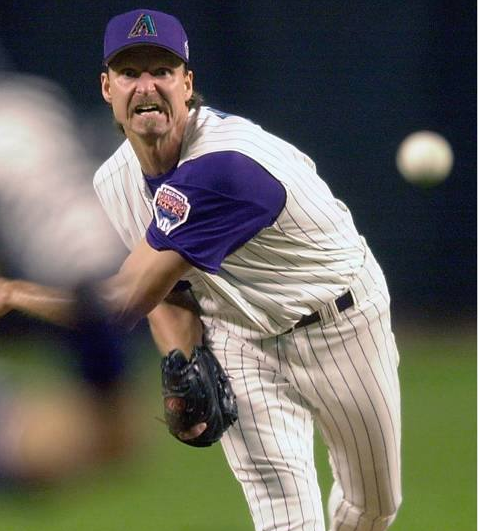
Mattingly took his newfound power stroke into the playoffs, where the Yankees faced the Seattle Mariners. Although New York ended up losing the first round matchup 3-2 after initially taking a 2-0 series lead, Mattingly proved to himself he could succeed when the games mattered most. Despite striking out a career-high four times against Randy Johnson in Game Three, Mattingly finished the series with 10 hits, one home run, six runs batted in, and a .417 batting average.
Retirement and the Hall of Fame
Knowing that Mattingly’s career was drawing to a close, the Yankees acquired first baseman Tino Martinez from Seattle during the off-season. Mattingly officially announced his retirement one month later, stating that his back problems made it too difficult for him to attempt a comeback. He ended his career with 222 home runs, 1,099 runs batted in, 1,007 runs scored, 2,153 hits, and a .307 batting average. Mattingly surpassed 30 homers three times, 100 runs batted in five times, 100 runs scored twice, 200 hits three times, 40 doubles four times, and batted over .300 on seven separate occasions. He led the American League in doubles three times, and he topped the circuit in hits and total bases twice each, and in runs batted in, batting average, and slugging percentage once each. Mattingly earned six selections to the A.L. All-Star Team and nine Gold Gloves. His .996 lifetime fielding percentage at first base tied him for the all-time lead at the time of his retirement.
The Yankees defeated the Atlanta Braves in the World Series less than 10 months after Mattingly announced his retirement, leaving the team’s former captain to ponder what might have been. Nevertheless, the Yankees relieved some of the angst he must have felt when they retired his number 23 and dedicated his plaque for Monument Park at Yankee Stadium on August 31, 1997. The plaque calls Mattingly “A humble man of grace and dignity, a captain who led by example, proud of the pinstripe tradition and dedicated to the pursuit of excellence, a Yankee forever.”
After retiring as a player, Mattingly spent seven seasons as a special spring training instructor for the Yankees, before accepting a position with the team as batting coach following the 2003 campaign. He spent three years serving in that capacity, before being promoted to the position of Joe Torre’s bench coach on October 26, 2006. New York’s managerial position became vacant one year later when Torre declined a one-year contract extension at the conclusion of the 2007 season, choosing instead to manage the Los Angeles Dodgers. The Yankees subsequently selected Joe Girardi over Mattingly as Torre’s replacement, prompting the disappointed Mattingly to join Torre in Los Angeles. After serving as the Dodgers’ hitting coach for three years, Mattingly was named the team’s new manager when Torre decided to retire at the end of the 2010 season.
Although no longer with the team, Don Mattingly remains a Yankee icon. General manager Brian Cashman, who started out in the organization as Mattingly’s playing career was drawing to a close, stated, “Purity. Donnie Baseball is all about the way it’s supposed to be.”
In discussing his former team captain, late Yankee owner George Steinbrenner once declared, “He was special. That’s the best word you can use for Mattingly because of all the phases of what he meant to me and the Yankees. He was just special.”
Mattingly revealed the qualities that made him so popular with Yankee fans when he said, “I never felt I was as talented as some other players. I played from the heart.”
Related Content
May 27
-
2007
On May 27, 2007, the St. Louis Cardinals option pitcher Anth ...
-
2006
On May 27, 2006, Anaheim right-hander Jared Weaver makes his ...
-
1981
On May 27, 1981, Lenny Randle of the Seattle Mariners tries ...

Comments
Be respectful, keep it clean.