NEWS   |   FORUMS     |   PLAYER PAGES   |   PLAYER RANKINGS     |   ALL-TIME TEAMS   |   BALLPARKS   |  > BASEBALL HISTORY  
Player Pages > Gaylord Perry > Player Stats

Gaylord Perry

Gaylord Perry
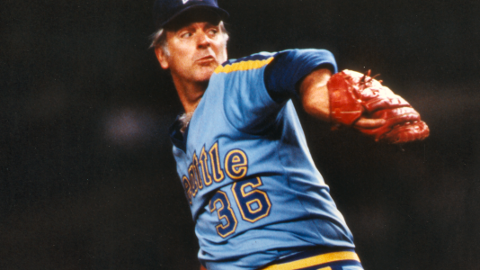
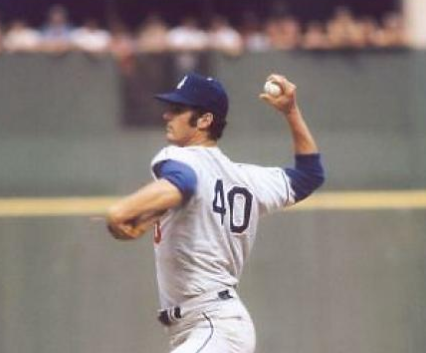
Gaylord Perry took his act to eight major league clubs, fooling batters with his sinking fastball. His ultimate weapon was his "phantom spitball" that he either threw or alluded to, unnerving enemy hitters, managers, and umpires. He was caught greasing the ball just once in his 22 seasons, but he admitted after his retirement that he threw the ball almost his entire career. Ironically, he refused to rely on the spitter the night he won his 300th game. Perry was the first pitcher to earn the Cy Young Award in both leagues, and he combined with brother Jim to form one of the finest sibling pitching duos in history.

Career Batting Stats
G AB H R HR RBI SB AVG SLG OBP OPS OPS+
787 1076 141 48 6 47 0 .131 .164 .153 .316 45.1

Quotes From Gaylord Perry

"I'd always have grease in at least two places, in case the umpires would ask me to wipe one off. I never wanted to be caught out there with anything though, it wouldn't be professional."

Where does Gaylord Perry rank among baseball greats?

Gaylord Perry ranks #32 among the Top 50 all-time at SP. Rankings ⇒


Best Season: 1972
Winning his first Cy Young award, Perry led the NL in wins (24), and complete games (29). He was second to Luis Tiant by an eyelash in ERA (1.92), and only knuckleballer Wilbur Wood threw more innings than Perry's 342 2/3. The voting for the award was close - Perry edging Wood 64-58.

Factoids
On May 6, 1982, Gaylord Perry became the 15th pitcher to win 300 games. Pitching in Seattle's Kingdome, Perry defeated the Yankees, 7–3. He gave up nine hits and six walks in becoming the first pitcher to reach the 300-win plateau since Early Wynn in 1963.

Spit and Polish
From 1975 to 1977, two Hall of Fame right-handers, Jim Palmer and Gaylord Perry, faced off three times in dazzling fashion. On June 13, 1975, 36-year old Gaylord Perry, less than three years removed from his 1972 Cy Young award winning season, was traded from the Cleveland Indians to the Texas Rangers in a blockbuster deal. The Rangers sent three pitchers, Jim Bibby, Jackie Brown, Rick Waits AND $100,000 to the Indians for Perry’s services. Perry got off to a rocky start with the Rangers, going 7-6, but he was riding a four game winning streak into a Thursday night, August 21 matchup against Jim Palmer and the Orioles.

Palmer, who would win his second Cy Young Award in 1975 and finish sixth in the MVP voting, was looking for his 20th win that night. The Orioles were in second place in the American League East seven games behind the front running Red Sox. The Rangers were stuck in fourth. Each pitcher excelled over the first three innings. Perry faced one batter over the minimum, with Paul Blair getting picked off after a first inning single, and Ken Singleton being erased after a Jim Northrup double play. Palmer retired the first nine Rangers. Texas began the scoring when Cesar Tovar, who singled, stole second and advanced to third on Dave Duncan’s thowing error, was driven in by Jeff Burroughs for an unearned run. The Orioles answered in their fifth with Hall of Famer Brooks Robinson doubling to right and scoring on a Bobby Grich double.

The back and forth trading of single runs continued in the Rangers’ sixth, and the Orioles’ seventh, with Baltimore’s tally scoring on a Robinson single. That was all of the runs for quite some time. From the seventh inning until the twelfth when he departed, Jim Palmer faced 20 batters over six innings. Perry, keeping pace through the Orioles eleventh, gave up no more runs.

Ultimately, the game was decided by the heroics of another Hall of Famer. Brooks Robinson, who had already contributed to the first two Oriole runs, drove in the deciding run on a double to center off reliever Steve Foucault in the top of the twelfth and scored the fourth and last run when Elrod Hendricks singled to right. The game ended 4-2, with Palmer going 12 innings and giving up one unearned run, while striking out six. Perry, while giving up 13 hits, went 11 innings giving up two runs and also striking out six. Both pitchers ended up with no decisions.

A paltry crowd of 6,418 fans were sitting in Memorial Stadium for a Friday night game between the Rangers and Orioles on August 27, 1976. Once again, the O’s were in second place in the East, this time 11.5 games behind the Yankees. The Rangers were mired in fourth, 19 games in back of the division leading Royals. Perry, looking for win 13, was pitted against Palmer, already at 17 wins on his way to his third Cy Young Award. Al Bumbry scored for the Orioles in the bottom of the first and, for the rest of the game, goose eggs were put on the board, until the bottom of the ninth. Gaylord went eight innings in a complete game loss, walking one and striking out a season high 11 batters. Palmer, also in a complete game performance, went nine innings, walking zero and striking out ten. The 2:36 long contest saw both hurlers at the top of their games for the second time in a row against each other.

The last time Perry would face Palmer as a member of the Rangers came in a nationally televised Game of the Week on Saturday July 23, 1977. For the third year in a row, the Orioles were in second place, this time just ˝ game behind the Red Sox. Again the Rangers were in fourth, but closer, at eight games behind of the White Sox. This game was the pinnacle of the three confrontations between the future Hall of Famers. For nine innings, these legendary hurlers shut out their opposition. Perry, two months shy of his 39th birthday, pitched nine scoreless innings, striking out nine, while allowing four hits and three walks. Palmer did even better, going 11 innings striking out nine and walking zero. The game ended in the thirteenth inning, with Mike Hargrove singling in Bump Wills, who had led of the top of the inning with the only extra base hit of the game, a double to center. Again, a no decision was the result of a hard day’s work for the two starting pitchers.

Two future Hall of Famers, three outstanding matchups. In the three head to head duels between Jim Palmer and Gaylord Perry, their stats were:

...........IP....H....R....ER....BB....K
Perry......28...24....5.....5.....5...26
Palmer.....32...19....2.....1.....0...25

Perry’s ERA for these games was 1.60, but Palmer’s was a mesmerizing 0.28. Plus, Palmer walked ZERO batters over the equivalent of three-and-a-half games.

— Jeff Katz

Pine Tar Accomplice
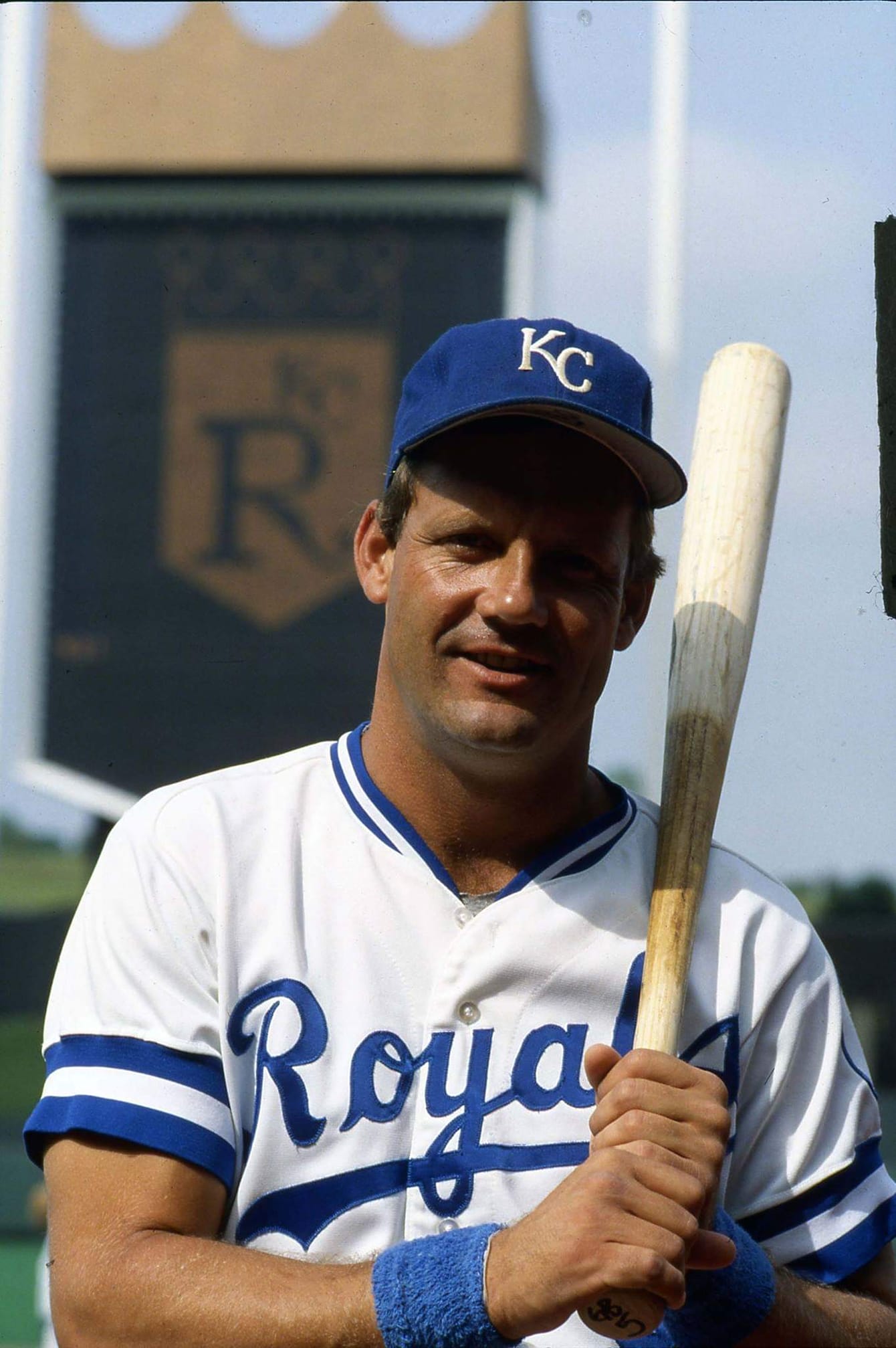
The day that George Brett went ballistic after umpires waived off his game-winning homer against the Yankees, Perry was on the bench for the Royals. True to his reputation for bending the rules, Perry tried to hide the bat when the umpires came hunting for the pine tar evidence.

A Different Inning, A Different Jersey
In his 300th game victory with the M's on May 6, 1982, Perry wore a different jersey each inning in order to sell them later as memorabilia. With this action, he proved to be years ahead of the trend that was later followed by Cal Ripken Jr. and Tony Gwynn in historic games.

Where He Played
Starting pitcher, almost exclusively from 1966 on. His first four seasons (1962-1965), Perry made 79 relief appearances. In 1966, Perry emerged from the shadow of Juan Marichal, winning 20 of his first 22 decisions. He limped to the finish line however, going 1-6 to end the season. Neither Marichal or Perry fared well enough to garner even one vote in the Cy Young race, as Sandy Koufax (27-9, 1.73) was a unanimous choice.

Born
Gaylord Jackson Perry was born on September 15, 1938, in Williamston, NC.

Batted:  Right
Threw:  Right

Major League Debut
4 14,

Nine Other Players Who Debuted in 1962
Willie Stargell
Bob Bailey
Ed Kranepool
Cookie Rojas
Tony Oliva
Gaylord Perry
Bob Veale
Dick Radatz
Tommy Harper

Uniform Numbers
#22 (1962), #28 (1962), #35 (1963), #36 (1963-1983)

Similar Players
Perry is really quite unique in the history of baseball.

Related Players
Frank Duffy and Sam McDowell were involved in the 1971 Winter Meeting deal that sent Perry to the Indians... Jim Bibby and Rick Waits were part of the deal that sent Perry to the Rangers... Jim Perry, winner of more than 200 games. Gaylord and Jim Perry, and Phil Niekro and Joe Niekro are the only brothers to each win more than 200 games in the majors... Rod Carew and Fergie Jenkins were inducted to the Hall of Fame the same year as Perry (1991).

Hall of Fame Voting
Year Election Votes Pct
1989 BBWAA 304 68.0%
1990 BBWAA 320 72.1%
1991 BBWAA 342 77.2%

No-Hitter
9/17/1968: For SF (N) vs. STL (N), 1-0 at SF. 9 innings pitched.

Post-Season Appearances
1971 National League Championship Series

Post-Season Notes
Perry started and won the first game of the '71 playoffs, beating the Pirates 5-4 thanks to homers from Willie McCovey and Tito Fuentes. In Game Four he was unable to hold 1-0 and 5-2 leads and was knocked out in the sixth inning. The Bucs won the series in four games.

Awards and Honors
1972 AL Cy Young
1978 NL Cy Young

Feats
On September 17, 1968, Perry pitched a no-hitter, defeating Bob Gibson and the Cardinals, 1-0. Ron Hunt's homer provided the margin... According to Elias Sports Bureau's Rob Tracy, only four pitchers have pitched four straight shutouts in the 40-year expansion era: Cory Lidle (four straight in 2002), Orel Hershiser (five straight in 1988), Luis Tiant (four straight in 1972) and Gaylord Perry (four straight in 1970)... On April 17, 1974, Perry hurled 15 innings against Milwaukee and left the game tied 4-4. The Brewers beat Perry's Indians in the 16th.

Milestones
On October 1, 1978, when Perry recorded his 3,000th strikeout (the victim was Joe Simpson of the Dodgers), he pitched 10 innings in a game the Padres won, 4-3. Also appearing in that game were future Hall of Famers Rollie Fingers (who relieved Perry and won the game), and Dodger starting pitcher Don Sutton.

Milestones

  • October 1, 1978: 3000th strikeout... Joe Simpson

  • May 6, 1982: 300th Win...

Pitching Feats

  • , 1974: ...

Transactions
Signed as an amateur free agent by San Francisco Giants (June 3, 1958); Traded by San Francisco Giants with Frank Duffy to Cleveland Indians in exchange for Sam McDowell (November 29, 1971); Traded by Cleveland Indians to Texas Rangers in exchange for Jim Bibby, Jackie Brown, Rick Waits and $100000 (June 13, 1975); Traded by Texas Rangers to San Diego Padres in exchange for Dave Tomlin and $125000 (January 25, 1978); Traded by San Diego Padres with Tucker Ashford and Joe Carroll to Texas Rangers in exchange for Willie Montanez (February 15, 1980); Traded by Texas Rangers to New York Yankees in exchange for Ken Clay and a player to be named later (August 14, 1980); Texas Rangers received Marvin Thompson (October 1, 1980); Granted free agency (October 23, 1980); Signed by Atlanta Braves (January 12, 1981); Released by Atlanta Braves (October 5, 1981); Signed by Seattle Mariners (March 5, 1982); Released by Seattle Mariners (June 27, 1983); Signed by Kansas City Royals (July 6, 1983).

On January 25, 1978, the Texas Rangers sent Perry to San Diego for pitcher Dave Tomlin and $125,000. Some "experts" at the time chided the Pads for making the deal, citing Perry as over the hill at 38. Tomlin, a 28-year old reliever, never pitched for the Rangers. Perry went 21-6 with a 2.73 ERA to win the NL Cy Young award. He would win 62 games after leaving Texas.

All-Star Selections
1966 NL
1970 NL
1972 AL
1974 AL
1979 NL

Replaced
A cast of misfit starters: Bobby Bolin, Ron Herbel, and Bob Hendley, who, in 1965, lost their jobs in the rotation.

Replaced By
Perry's last job in the rotation was with the Royals in 1983. The next season, the Royals swept away the veterans (in addition to Perry, that included Larry Gura, Paul Splittorff, Steve Renko, and Vida Blue), and brought in talented arms attached to Mark Gubicza, Charlie Leibrandt, Mike Jones, and Danny Jackson.

Best Strength as a Player
Control. Perry walked more than 90 batters in a season just three times in his long career. And he got better with age - after the age of 35, Perry walked just 2.2 batters per nine innings.

Largest Weakness as a Player
Perry was a terrible hitter, batting .131 in more than 1,000 career at-bats. He did have some pop - he blasted six homers.

Learn More about Gaylord Perry
Search Amazon.com for Books about Gaylord Perry ⇒
Search for Gaylord Perry at Google ⇒
View a map of his hometown at Mapquest ⇒

 
Player Pages:
Hall of Famers
Top 100 of all-time
Players with bios
Browse Player index