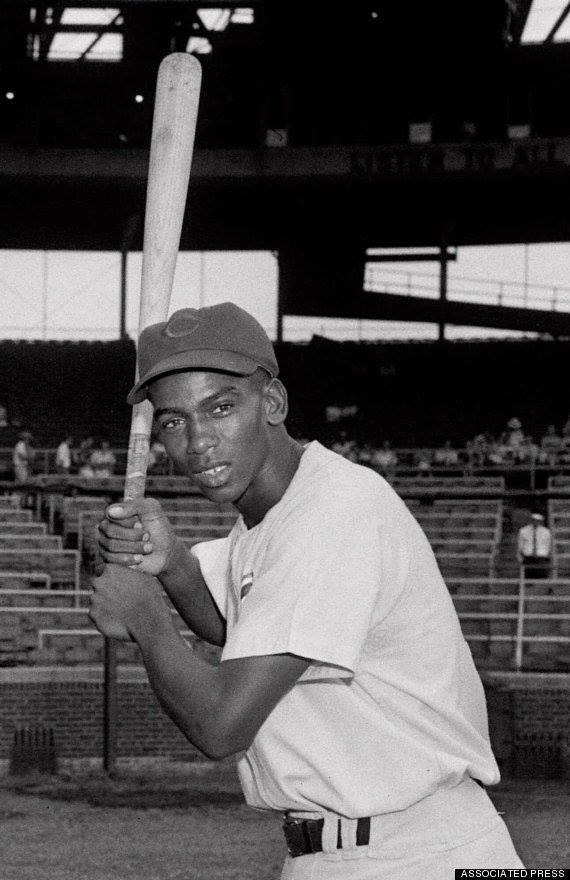
Al Rosen
- Position(s):
- 3B, OF, 1B, SS, 2B
- Nicknames:
- Flip
- Born:
- February 29, 1924
- Bats:
- Right
- Throws:
- Right
- Height:
- 5' 10"
- Weight:
- 180 lbs
- Major League Debut:
- 9-10-1947 with CLE
- Allstar Selections:
- 1953 MVP, 1953 ML
One of the most feared hitters in the American League during the first half of the 1950s, Al Rosen finished among the leaders in the junior circuit in both home runs and runs batted in five straight times, from 1950 to 1954. The slugging third baseman knocked in more than 100 runs in each of those seasons, twice leading the A.L. in RBIs, while also leading the league twice in home runs. Rosen came within a percentage point of winning the American League Triple Crown in 1953, when he captured league MVP honors by hitting 43 homers, driving in 145 runs, and batting .336. Only a bad back and a mangled finger prevented Rosen from accomplishing so much more than he did during his brief 10-year career, forcing him into premature retirement at the conclusion of the 1956 campaign, at just 32 years of age.
Biography:
Born in Spartanburg, South Carolina on February 29, 1924, Albert Leonard Rosen moved with his family to Miami, Florida at the age of three. Growing up without a father, he was raised by his grandmother, mother, and aunt. After suffering from asthma as a child, Rosen spent much of his youth trying to dispel the stereotype that Jews weren’t good athletes. He later recalled, “Sports were always my addiction. I fell in love with the game.”
Although Rosen eventually gained fame as a baseball player, he earlier developed a reputation as a tough guy by entering the ring as an amateur boxer, where he had his nose broken 11 times. Rosen finally decided to concentrate on the less-violent sport of baseball, following in the footsteps of his childhood idols Hank Greenberg and Lou Gehrig. After graduating from Florida Military Academy in St. Petersburg, Rosen enrolled in the University of Florida in Gainesville, where he played for the Florida Gators baseball team for one year. He left the university after his second semester to play minor league baseball when the Cleveland Indians signed him as an amateur free agent in 1942. After spending the 1942 season in the minor leagues, Rosen missed the next three years while he served in the United States Navy fighting in the Pacific during World War II.
Returning to the world of professional baseball in 1946, Rosen led the Canadian-American League with 15 homers, 86 RBIs, and 19 triples. He earned his first call-up to the major leagues in September of the following year after he captured Texas League MVP honors by hitting .349 and driving in 141 runs for the Oklahoma City Indians. Rosen arrived in Cleveland determined and enthusiastic, but team management considered him no immediate threat to incumbent third baseman Ken Keltner, whose glove work far exceeded that of the inexperienced and extremely raw rookie. Rosen’s stay in Cleveland turned out to be quite brief, since the Indians’ front office returned him to the minor leagues the following year for more seasoning.
Rosen spent most of 1948 and 1949 in the minors as well, making only token appearances in Cleveland, and failing to distinguish himself at all in an Indians uniform. However, the 26-year-old third baseman finally got his break when Cleveland parted ways with Keltner prior to the start of the 1950 campaign. Making the most of his opportunity, Rosen established a new American League record for rookies by topping the circuit with 37 home runs. He also knocked in 116 runs, scored 100 others, batted .287, and walked 100 times, enabling him to compile an outstanding .405 on-base percentage. Rosen also sufficiently improved his defensive skills to lead all A.L. third basemen with 322 assists.
Rosen continued to establish himself as one of the American League’s top sluggers over the course of the next two seasons, teaming up with Larry Doby to give the Indians the junior circuit’s most formidable one-two punch. After hitting 24 homers and driving in 102 runs in 1951, Rosen hit 28 home runs, knocked in a league-leading 105 runs, scored 101 others, and batted .302 in 1952, en route to earning his first of four consecutive All-Star selections and a 10th-place finish in the league MVP voting. Rosen also struck out only 54 times – an unusually low number for a home-run hitter such as him. In fact, displaying a keen batting eye and a tremendous amount of patience at the plate, he struck out fewer than 50 times in four of his seven full seasons, never fanning more than 72 times in any single campaign.
As Rosen made a name for himself as one of the league’s most feared batsmen, he also developed a reputation for being a fierce competitor, and for being someone who had the courage to stand up to the torrent of abuse he received for being the game’s most notable player of Jewish descent. Rosen later commented, "I can only tell you this: there was anti-Semitism throughout my playing days, and it came from the stands, it came from the managers, the coaches and players. But as time went on, and particularly after the birth of Israel as a nation, I think that a new aura took over and people had more respect for Jewish athletes, or Jews generally, because it showed once again that Jews were not to be taken lightly and that they could fight as well as be bookkeepers and accountants and that sort of thing. The kind of taunting and things like that that I heard personally from the benches softened a great deal after 1946."
Still, there were times after he reached the major leagues that Rosen experienced the kind of verbal abuse that made it necessary for him to stand up to those who insulted his ancestry. On one particular occasion, a member of the Chicago White Sox called the former amateur boxer a “Jew bastard.” White Sox pitcher Saul Rogovin, also of Jewish descent, recalled that an angry Rosen responded by striding belligerently towards the Chicago dugout and challenging the “son of a bitch” to a fight. The Chicago player backed down.
Another time, Rosen challenged an opposing player who had “slurred his religion” to fight him under the stands. When a Red Sox catcher called him anti-Semitic names, Rosen called time and “started towards him, to take him on.” Hank Greenberg, who served as general manager in Cleveland throughout most of Rosen’s tenure with the team, recalled that the third baseman “wanted to go into the stands and murder” fans who hurled anti-Semitic insults at him. Rosen himself was later quoted as saying, "There's a time that you let it be known that enough is enough.... You flatten them."
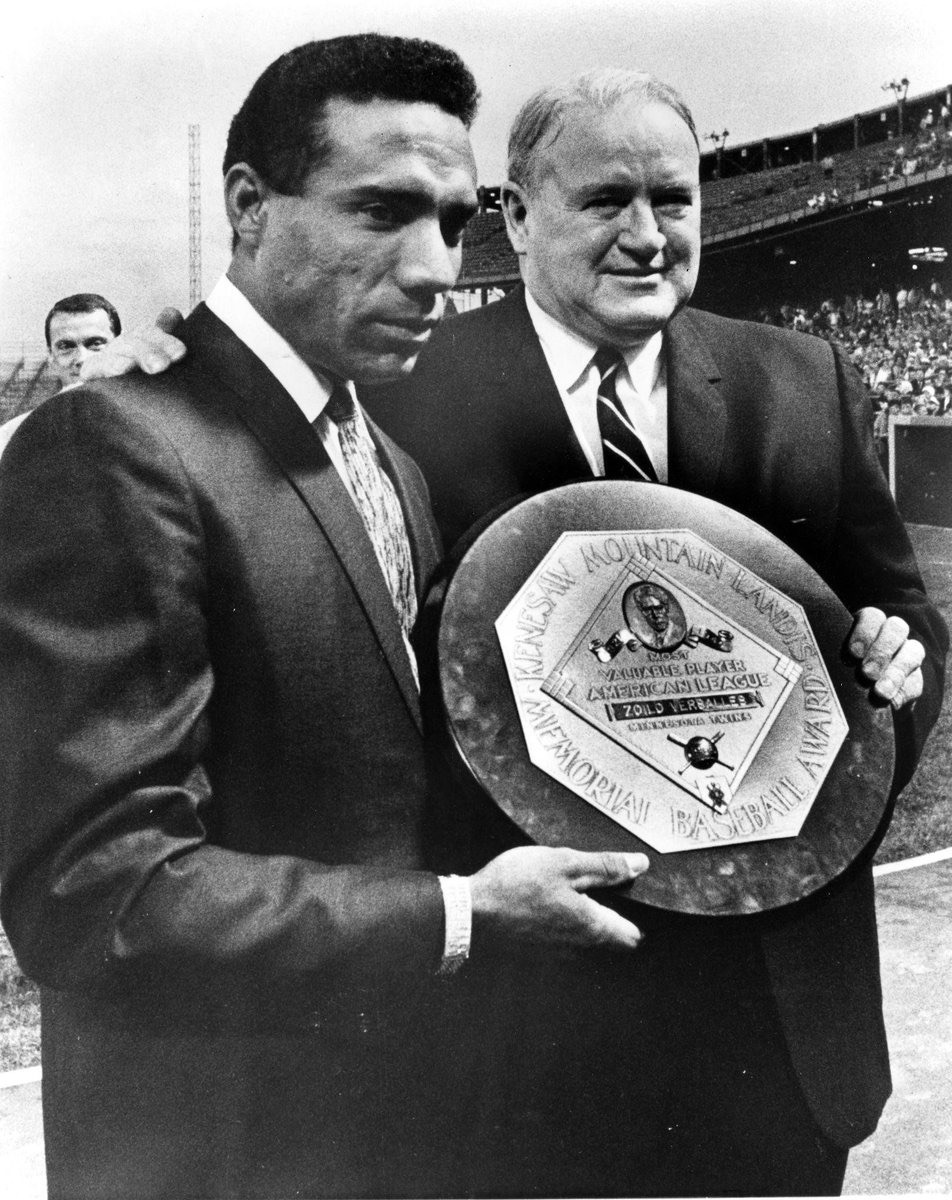
While Rosen stood up for himself verbally whenever he found it necessary to do so, he made an even bigger statement with his bat in 1953. Experiencing the greatest season of his career, the right-handed hitting slugger finished among the American League leaders with 201 hits and a .422 on-base percentage, while topping the circuit with 43 home runs, 145 runs batted in, 115 runs scored, 367 total bases, and a .613 slugging percentage. He also batted .336, losing the batting title on the season’s final day to Mickey Vernon, who compiled an average of .337 for the Washington Senators. Had Rosen finished ahead of Vernon in the batting race, he would have won the A.L. Triple Crown. He instead had to settle for being named the unanimous winner of the league MVP Award.
Rosen’s extraordinary performance drew praise from Yankee manager Casey Stengel, who said of the Cleveland third baseman, “That young feller, that feller’s a ball player. He’ll give you the works every time. Gets all the hits, gives you the hard tag in the field. That feller’s a real competitor, you bet your sweet curse life.”
Rosen picked up right where he had left off early in 1954, batting .372 and leading the league with 11 homers and 44 RBIs after the first 35 games. However, his career took a sudden turn for the worse when he suffered an injury while putting his own interests aside for the betterment of his team.
Seeking to get spring sensation Rudy Regalado into the lineup, Cleveland manager Al Lopez asked Rosen to play first base for a few weeks in order to allow the youngster to get some playing time at third. The shift in positions proved disastrous for Rosen, who broke his right index finger on a line drive hit by Chicago’s Jungle Jim Rivera, after having his vision obscured by the runner at first base. Rosen sat out a few days, but he returned to the lineup well before the swollen finger healed. Looking back on the incident, Rosen said, "Today they would have sent me to the hospital, X-rayed me and put me on the disabled list….I was equally at fault. I wanted to play."
Rosen’s premature return caused the condition of his finger to worsen. "It was mangled," he said. "All of a sudden, I was just another out."
Rosen batted with the broken finger sticking in the air, unable to wrap it around the bat. He appeared in the All-Star Game in that condition, somehow managing to hit two home runs and drive in five runs while leading the American League to an 11-9 victory. “I had one of those days you dream about," Rosen remembered.
Continuing to play in pain throughout the remainder of the year, Rosen helped lead the Indians to the pennant by hitting 24 home runs, driving in 102 runs, and batting .300. Despite his heroic efforts, and even though he knocked in more than 100 runs for the fifth straight season, Rosen had his salary cut from $42,500 to $37,500 by general manager Hank Greenberg at the end of the year.
Rosen returned to his more familiar position of third base full time in 1955, but he found himself unable to ever again perform at the lofty level he reached prior to injuring his finger. Although he hit 21 home runs and knocked in 81 runs, he batted just .244 – easily his lowest mark since becoming a regular. The Indians cut Rosen’s salary by another $5,000 at season’s end, leaving the veteran third baseman feeling somewhat angry and resentful.
No longer deriving a great deal of pleasure from playing the game, and hampered by numerous physical ailments, including back problems and whiplash resulting from an automobile accident, Rosen played just one more year. After hitting 15 home runs, driving in 61 runs, and batting .267 in 1956, he announced his retirement, leaving the game at only 32 years of age. Rosen ended his career with 192 home runs, 717 runs batted in, 603 runs scored, a .285 batting average, and a .384 on-base percentage. In addition to driving in more than 100 runs five times, he hit more than 20 home runs in six of his seven full seasons. Rosen also batted over .300, compiled an on-base percentage in excess of .400, and scored more than 100 runs three times each.
After his playing days, Rosen became a stockbroker, continuing in that field until he chose to reenter baseball 20 years later as President of the New York Yankees. He remained in New York for two years, subsequently becoming the General Manager of the Houston Astros from 1980 to 1985. From Houston, he moved on to San Francisco, where his clever maneuvering as Giants GM enabled the team to capture the N.L. West title in 1987 and the N.L. pennant in 1989. He held his GM position with the Giants from 1985 to 1992, providing only occasional consultation work for major league teams since, including a stint with the Yankees as special assistant to the general manager in 2001 and 2002.
By Bob_Cohen
Related Content
May 28
-
1978
On May 28, 1978, future Hall of Famer Jim Palmer records the ...
-
1973
On May 28, 1973, Chicago White Sox hurler Wilbur Wood picks ...
-
1968
On May 28, 1968, the American League announces that it will ...

Comments
Be respectful, keep it clean.